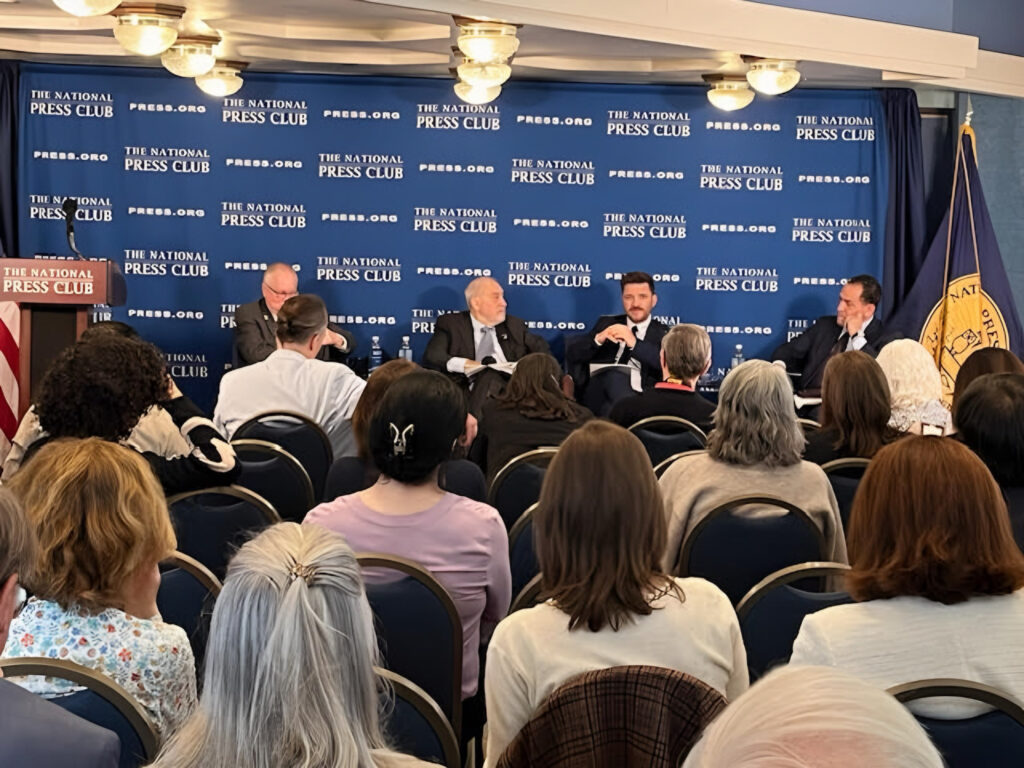
Panel on Journalism for Development Report.
“Good information is good for a well functioning economy, but it is also about a well functioning democracy”, said Nobel Prize-winning economist, Joseph Stiglitz, at a public event in the National Press Club in Washington, D.C. Stiglitz made remarks during the release of the new UNESCO study on Journalism in Democracy, which highlights the relationship between press freedom and advancing democratic values and economic development. The study was authored by Stiglitz, Anya Schiffrin, and Dylan Groves.
Stiglitz noted that “journalism plays an important role in what people care about to policy makers, conveying information on how governments or companies are doing.” But the study reveals that the business model supporting journalism has broken down over the last ten years. According to Stiglitz, “people are using more social media to advertise their information. Not only advertising, but subscription has broken down. We are at a critical moment.”
Stiglitz added that “there is no free lunch. You don’t get quality journalism, you don’t do investigations for free. Somebody has to do it. So the fact that you are getting it for free over your iPhone, does not mean that it originated at a zero cost. So it has to be paid for.” The report indicates that for good journalism to survive, it needs to be considered as a public good.
Arturo Herrera Gutierrez, global director for Governance Global Practice in the Equitable Growth, Finance, and Institutions Practice Group (EFI) Vice Presidency, Governance at the World Bank, and Kristjan Burgess, a senior programme specialist at UNESCO in Paris were the two other panelists commenting on the new study.
With UNESCO support, The Media for Democracy Foundation (MFD) brought together representatives of several organizations working on supporting independent media around the world for a discussion on the study’s findings. This was the inaugural event of the newly created Media for Democracy Foundation (MFD), a non profit organization aimed at advancing media freedom in support of democratic values.
The discussion on the UNESCO study was led by Mark M. Nelson, former senior director of the National Endowment for Demorcacy‘s Center for International Media Assistance (CIMA). Others attending the event included Dylan Groves, co-author of the UNESCO report; Josh Machleder, Director for Media and Information at the National Endowment for Democracy; Eduardo Bertoni, Director of the Center of Human Rights and Humanitarian Law at American University; Luz Mely Reyes, Co-founder of Efecto Cocuyo and ICFJ Knight Fellow; Anna Kompanek, MBA, PMP, CCEP-I, Director of Global Programs at the Center for International Private Enterprise (CIPE); and Kristjan Guy Burgess, Program Specialist at UNESCO.
The UNESCO study is based on three pillars for creating the robust and healthy environment for journalism envisioned by the 1993 Windhoek Declaration which states that a free press is fundamental to democracy and human rights.
The first pillar is creating an enabling environment for professional journalism which involves developing legal regimes that support free expression such as the right to tell. For journalists to do their job, they need to have access to information enshrined in right to know laws that are actively enforced.
The second pillar is public support for the media. The media provides a public good, and a central responsibility of the government is providing such public goods.
The third pillar is ensuring a diverse, viable private media and avoiding capture. In many countries, an enormous concentration of media market power undermines diversity. Making matters worse, a large proportion of media outlets are controlled by the ultra-wealthy, increasing the probability that the views in media reflect the special perspectives of economic elites, and giving the ultra-rich the power to shape the national narrative.
The Media for Democracy Foundation was created to bring together different stakeholders required to build an enabling environment for a free and independent press that advances democratic values. Luis Botello, Founder and President of the MFD Foundation, says that the idea for the new organization was developed while completing the Public Leadership Credential of the Kennedy School of Government at Harvard University. “This program gave me many tools required to make evidence-based decisions for innovation and scaling”, says Botello.
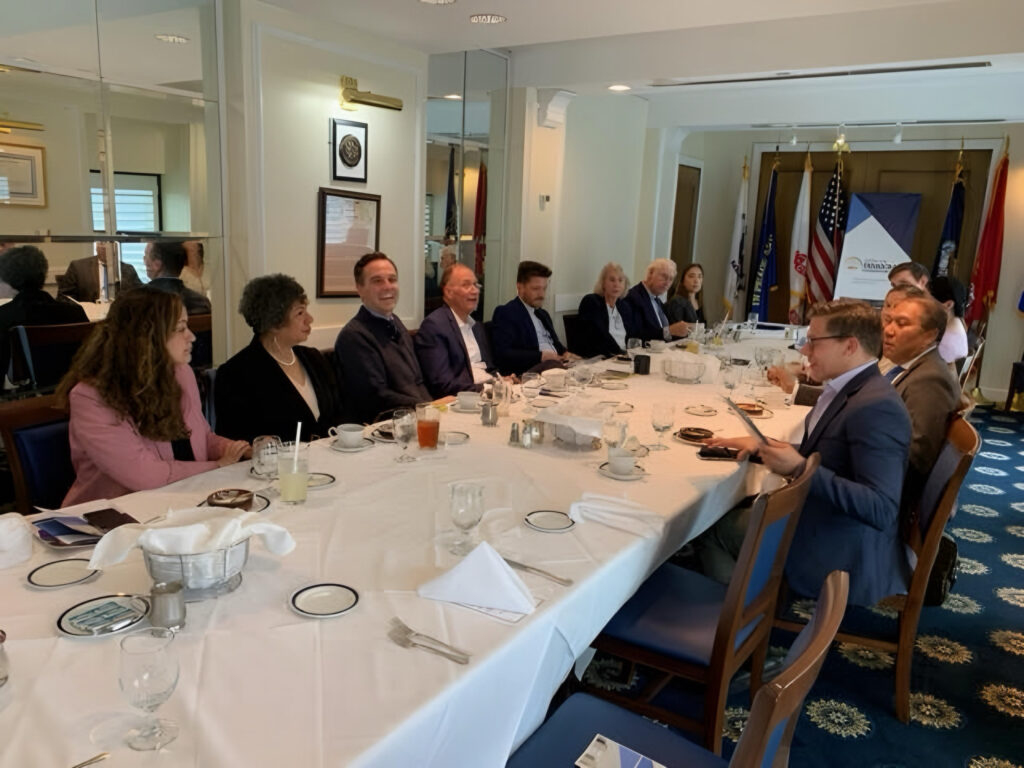
Discussion with representatives of media assistance organizations.
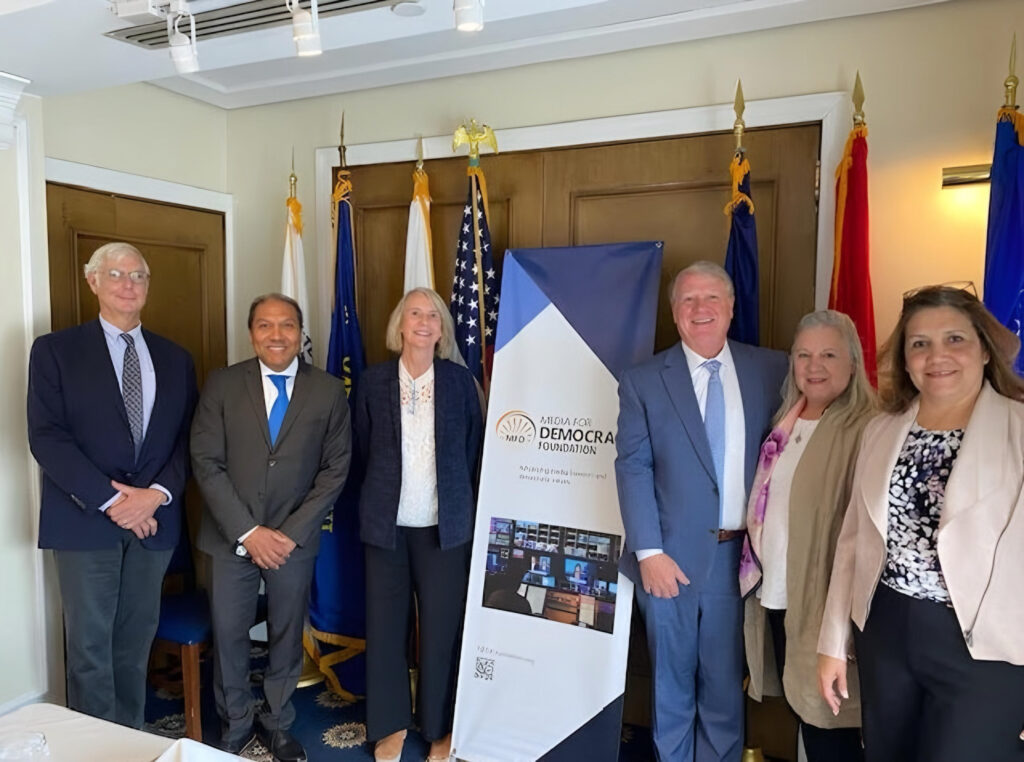
MFD Board Members